What Nutrients Do Plants Need?
What Nutrients Do Plants Need? A Simple Grower Guide to Healthy Growth, Roots, and Yields
If you have ever asked what nutrients do plants need, you are asking the right question. Whether you grow in soil, coco, containers, raised beds, or hydroponics, plant growth always comes back to one thing: giving plants the essential nutrients they need in the right balance. At RootboundX, we believe growers should understand exactly what goes into a feed program so they can grow with more confidence, more control, and better results.
What plants need to grow
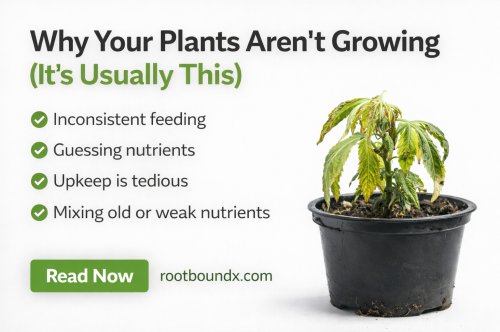
Plants need light, water, air, and the right nutrient supply. When growers search for phrases like what nutrients do plants need, best nutrients for plants, essential plant nutrients, or what do plants need to grow healthy, they are usually trying to solve one real problem: slow growth, weak roots, pale leaves, poor flowering, or disappointing yields.
The truth is simple. Plants need a set of core nutrients to build leaves, stems, roots, flowers, and fruit. If even one major nutrient is missing or out of balance, growth suffers.
The 3 primary nutrients plants need
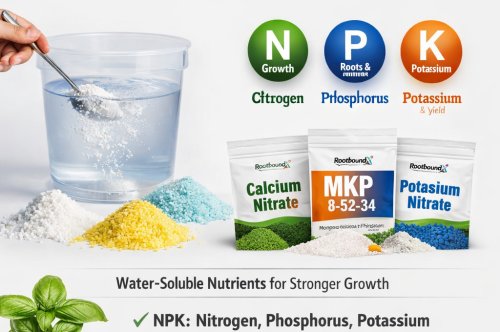
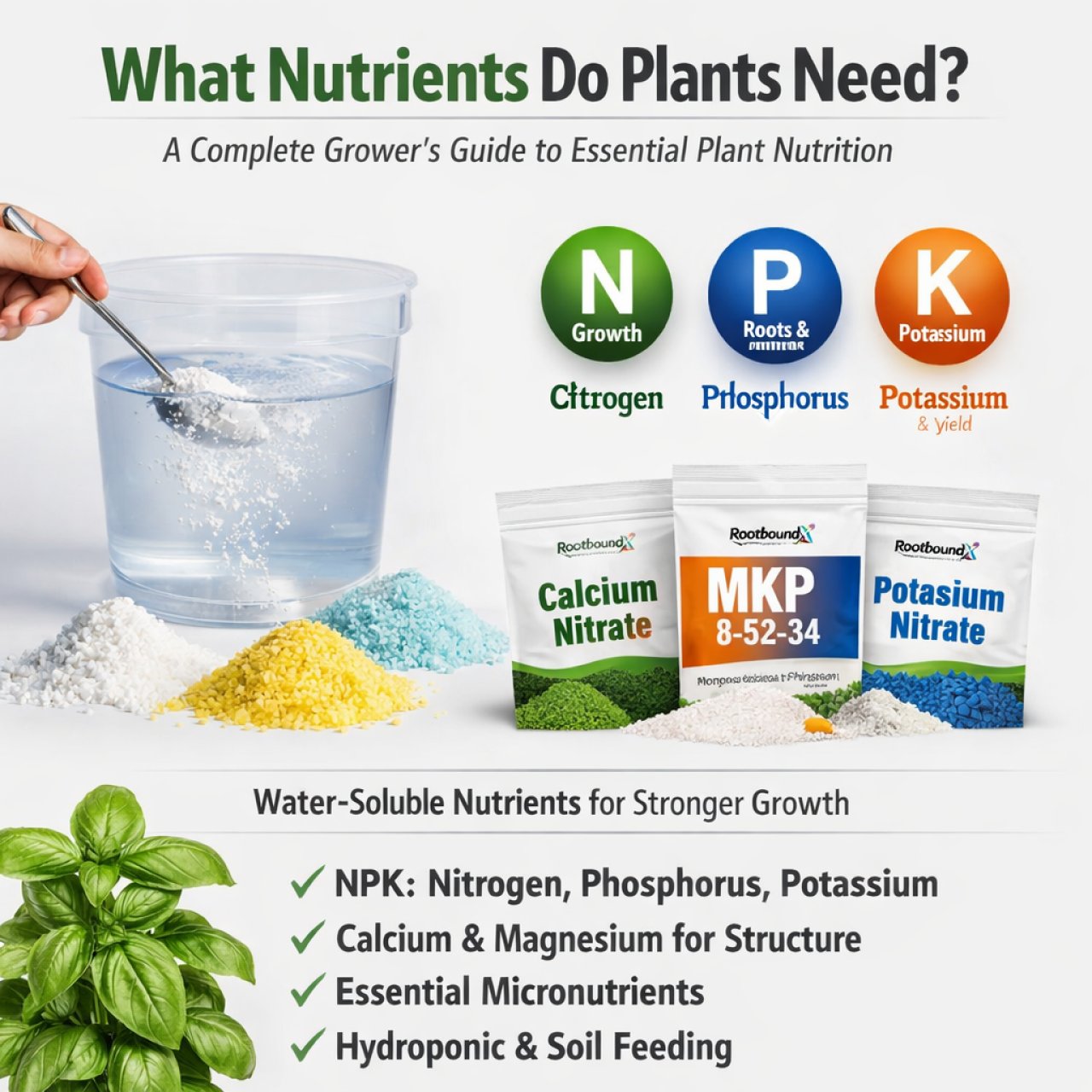
The three primary nutrients are commonly shown on fertilizer labels as NPK. If you are searching for what is NPK or what nutrients do plants need most, this is where to start.
1. Nitrogen (N)
Nitrogen supports leafy growth, green color, and overall vigor. Plants use nitrogen heavily during active vegetative growth. Low nitrogen often shows up as pale leaves, weak development, and slow progress. Growers looking for plant food for green growth are usually talking about nitrogen.
2. Phosphorus (P)
Phosphorus helps with root development, early establishment, flowering, and energy transfer inside the plant. When people search best nutrient for roots or what helps plants flower, phosphorus is one of the key answers.
3. Potassium (K)
Potassium supports overall plant strength, water movement, stress handling, flower quality, and fruit development. It helps plants stay balanced and perform better through the full growth cycle. Searches like best potassium fertilizer for plants or what helps plant strength and yield usually point here.
Secondary nutrients plants also need
Plants need more than just NPK. Healthy feeding programs also include important secondary nutrients. These often make the difference between average growth and strong, consistent performance.
Calcium (Ca)
Calcium helps build strong cell walls, supports structure, and improves new growth quality. If you are searching for why plants need calcium or calcium for tomatoes, peppers, lettuce, and hydroponics, calcium is a major part of healthy development.
Magnesium (Mg)
Magnesium plays a central role in photosynthesis. It helps plants capture and use light efficiently. Searches like magnesium for plants or why plant leaves turn yellow between veins often connect back to magnesium issues.
Sulfur (S)
Sulfur supports enzyme activity, plant metabolism, and overall nutrient efficiency. It is often overlooked, but it still matters in a complete plant nutrition program.
Micronutrients plants need for complete nutrition
Plants also require micronutrients in smaller amounts. Even though the plant uses less of them, they are still essential. If you are looking up complete plant nutrition or all nutrients plants need, these matter too.
- Iron (Fe) – supports chlorophyll formation and healthy green growth
- Manganese (Mn) – supports enzyme processes inside the plant
- Zinc (Zn) – helps with growth regulation and development
- Copper (Cu) – involved in key metabolic functions
- Boron (B) – important for cell development and reproduction
- Molybdenum (Mo) – helps plants use nitrogen properly
- Chlorine (Cl) – needed in very small amounts for basic plant processes
So what nutrients do plants need most?
For most growers, the practical answer is this: plants need nitrogen, phosphorus, potassium, calcium, magnesium, sulfur, and trace micronutrients. The exact ratio changes depending on crop type, growth stage, and growing method.
Seedlings, vegetative plants, flowering plants, fruiting crops, and hydroponic systems do not all feed the same way. But the nutrient list itself stays consistent. The difference is the balance.
Why nutrient balance matters
One of the biggest mistakes growers make is using random fertilizer products without understanding what the plant is actually getting. Too much nitrogen can create soft, stretched growth. Too little calcium can affect structure and new growth. Weak phosphorus and potassium levels can limit rooting, flowering, and final performance.
That is why serious growers search for terms like water soluble plant nutrients, clean hydroponic nutrients, plant nutrient guide, and best fertilizer for roots and blooms. They want cleaner inputs, better control, and stronger results. That is exactly the lane RootboundX is built for.
Common nutrient sources growers use
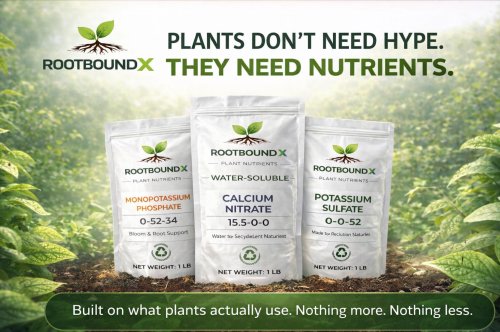
In professional-style feeding programs, growers often use clean, water-soluble raw nutrient sources to build a more accurate plant nutrition system. These sources are popular because they dissolve well, store efficiently, and allow better control over feed strength.
- Calcium Nitrate – a major source of nitrogen and calcium
- Monopotassium Phosphate (MKP 0-52-34) – a key source of phosphorus and potassium
- Potassium Nitrate – provides nitrogen and potassium
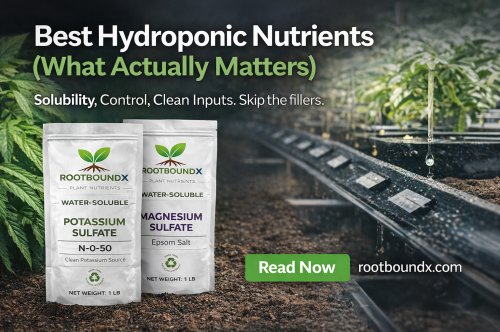
- Potassium Sulfate – provides potassium and sulfur
- Magnesium Sulfate – provides magnesium and sulfur
These are some of the same core inputs growers look for when searching hydroponic nutrients, dry nutrients for plants, water soluble fertilizer for plants, MKP fertilizer, or calcium nitrate for plants. RootboundX focuses on this clean-input, grower-grade approach because performance starts with what goes into the bag.
Signs your plants may need better nutrition
- Slow growth
- Pale green leaves
- Weak stems
- Poor root development
- Low flower production
- Small fruit or low yield
- General lack of vigor
These issues do not always mean a plant is missing one specific nutrient, but they usually mean the feeding program needs work. Better nutrient quality, better solubility, and better ratios can make a major difference.
Why growers choose RootboundX
RootboundX is built for growers who want straightforward, water-soluble plant nutrition without filler-heavy confusion. Our focus is on clean inputs, practical feeding value, and products growers can actually use across hydroponics, containers, and soil-based growing.
If you are searching for RootboundX nutrients, grower grade plant nutrients, water soluble nutrients for hydroponics, or dry nutrients for stronger roots and better blooms, you are in the right place.
We believe plant nutrition should be clean, simple, and performance-driven. No fluff. No mystery. Just the nutrient building blocks plants actually use.
Final answer: what nutrients do plants need?
Plants need nitrogen, phosphorus, potassium, calcium, magnesium, sulfur, and micronutrients like iron, manganese, zinc, copper, boron, molybdenum, and chlorine. Those nutrients support leaf growth, roots, photosynthesis, flowering, fruiting, strength, and overall plant health.
The better the nutrient quality and balance, the better the chance your plants have to thrive. That is why more growers are moving toward cleaner, water-soluble feeding systems and learning exactly what their plants need at each stage.
Feed with more control. Grow with more confidence.
Explore RootboundX for clean, water-soluble plant nutrients built for growers who care about strong roots, healthy growth, and better results.
RootboundX supports growers looking for hydroponic nutrients, dry nutrient inputs, bloom support, vegetative support, and dependable plant feeding solutions with grower-grade intent.